Welding extends the life of equipment and machinery by providing structural repairs, reinforcing worn components, and allowing for cost-effective customization. It restores functionality to broken machinery, prevents premature replacement, and increases durability to withstand heavy industrial use, reducing overall maintenance costs and operational downtime.
Metal equipment takes a beating. Day after day, machinery, pipes, fences, and structural components deal with heat, moisture, friction, and physical stress. Over time, cracks form, joints weaken, and corrosion eats away at surfaces. When equipment starts showing those signs, the real question is, repair it or replace it? In most cases, welding offers a faster, smarter, and far more affordable path forward.
TurnKey Welders serves residential and commercial clients throughout New Orleans and the surrounding area with expert mobile welding solutions built to restore and protect your metal assets. From structural repairs to pipe maintenance, our licensed team brings certified welding work directly to your site.
Call us at (504) 285-5618 to get a free estimate today.
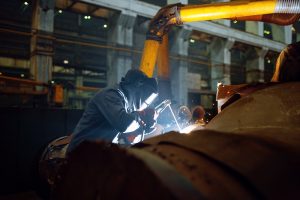 Small defects rarely stay small. A hairline fracture in a structural frame or a pinhole in a pipe will grow under continued stress, eventually taking equipment out of service entirely and driving up replacement costs.
Metal fatigue is one of the leading causes of early equipment failure. Repeated load cycles create micro-cracks at stress points, especially at joints and weld seams. Moisture accelerates the problem by seeping into those cracks and promoting rust from the inside out.
The American Welding Society (AWS) recognized the need for standardized welding practices in heavy machinery and established the D14 Committee on Machinery and Equipment. The committee developed a suite of standards covering fabrication, quality, inspection, and repair of welded components in construction, agricultural, and industrial settings.
Catching and addressing early-stage defects with proper weld repairs stops deterioration before it becomes a costly or dangerous failure.
Welding repairs damaged components by fusing new material directly into the affected area, restoring strength without pulling the entire part. In many cases, a properly executed weld produces a joint that performs as well as the original, or better.
Repair costs through welding are almost always a fraction of full replacement. A cracked equipment frame can be gouged out, cleaned to bare metal, and re-welded to AWS D14 standards, restoring its load-bearing capacity and extending its service life by years. This approach applies to construction equipment, fencing systems, iron railings, and pipe networks alike.
Hard-facing is another technique worth understanding. It involves depositing a wear-resistant weld layer over surfaces that experience high abrasion, rebuilding worn material while making it more resistant to future wear. For high-contact surfaces on agricultural or industrial equipment, hard-facing can cut down on how often components need attention and reduce operating costs over the long run.
Corrosion and erosion thin out metal walls and joint surfaces over time, reducing load capacity and creating leak points. A welder can rebuild these areas with compatible filler material, restoring original thickness and sealing the damage before it spreads to surrounding metal.
Not every repair is the same. Minor cracks and surface wear are straightforward candidates for welding, while severely compromised components may warrant a closer evaluation. Getting a professional assessment early keeps options open and usually leads to a lower-cost outcome.
If your equipment is showing signs of wear, explore the full range of welding services available to find the right repair approach for your situation.
Almost any metal structure exposed to stress, moisture, or repeated movement will develop wear points over time. Pipes, iron railings, fences, gates, structural steel, and industrial machinery components are among the most common candidates for weld repair.
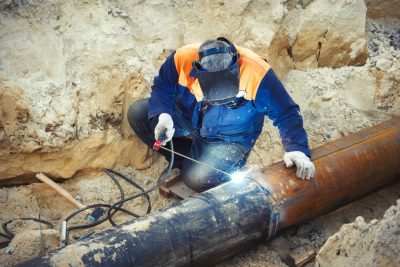
Leaks, corrosion pitting, and joint failures in pipe systems can be repaired on-site without removing and replacing entire runs. Pipe welding is particularly valuable in systems where shutdowns are expensive or site access is limited.
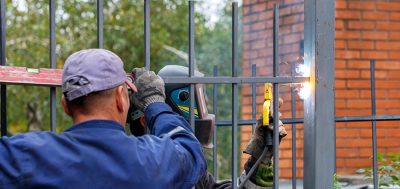
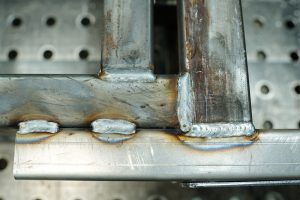 Iron railings and fences take constant exposure to the elements. In the humidity of New Orleans, rust and corrosion attack welds and base metal alike. Re-welding deteriorated sections restores strength and prevents a complete replacement of otherwise sound material.
Agricultural and construction equipment, including loaders, attachments, and support frames, also benefit significantly. Buckets crack, frames fatigue, and attachment points wear out. Each of these issues is a strong candidate for a targeted weld repair rather than a full equipment swap.
Commercial gates and structural steel framing face repeated mechanical stress from daily use and weather. Weld repairs on hinges, frames, and load-bearing connections restore function and security without requiring a full gate or structural replacement, keeping both timelines and budgets manageable.
Scheduled weld inspections and minor repairs, performed before damage progresses, are one of the most cost-effective maintenance strategies available for metal equipment. A qualified welder can identify fatigue cracks, corroded weld seams, and thinning material that the untrained eye would miss, long before any of it causes a shutdown.
During a preventive inspection, a certified welder typically looks for:
For businesses and property owners that rely on metal structures or equipment in daily operations, scheduled welding inspections are a direct way to avoid unplanned downtime. This is especially relevant for pipe systems, gates, and industrial equipment that operate under consistent loads and weather exposure.
Regular preventive maintenance also delivers practical benefits beyond catching problems early:
Specialized mobile welding services make preventive maintenance more practical by bringing a certified welder to your location, eliminating the cost and delay of transporting heavy equipment to a shop.
The right welding process depends on the base material, the type of damage, and the load the repaired joint will need to carry. MIG, TIG, and shielded arc welding each have distinct strengths, and choosing the right one directly affects how long the repair holds.
 MIG welding is well suited for thin to medium thickness steel, making it a practical choice for a wide range of structural repairs on frames, brackets, and fencing. It deposits material quickly and produces strong, clean welds across most general repair applications.
Keeping metal equipment and structures in service longer comes down to one thing: addressing wear and damage before it compounds. Welding repairs restore structural integrity, prevent further deterioration, and save the cost of premature replacement across pipes, fencing, railings, machinery, and more.
TurnKey Welders brings licensed mobile welding to properties and job sites throughout New Orleans and the surrounding region. Our certified welding team handles everything from emergency repairs to scheduled maintenance, with expertise across MIG, TIG, and shielded arc processes.
Contact us today to schedule your free estimate and find out how welding can extend the life of your equipment.
With proper repairs, welding can extend the usable life of metal equipment by many years, and in some cases decades. The outcome depends on the extent of the original damage, the welding technique used, and whether follow-up maintenance is performed. Early repairs consistently yield better results than waiting for a component to fail completely.
In most cases, yes. Professional weld repairs cost a fraction of full equipment replacement, especially for structural components and pipe systems. Replacement becomes more practical when repair costs approach or exceed roughly 50 percent of the equipment’s replacement value, a threshold widely referenced in industrial maintenance planning.
Yes. Professional mobile welding units carry the equipment needed for MIG, TIG, and shielded arc welding at your location. Mobile service eliminates the need to transport heavy or immovable equipment to a shop, reducing downtime and logistical cost significantly.
Hard-facing is a welding technique where a wear-resistant layer is deposited over surfaces that experience high friction or abrasion. It rebuilds worn material while adding resistance to future wear, making it particularly useful on agricultural equipment, loaders, and other machinery with high-contact surfaces.
Common signs that welding repair is appropriate include visible cracks, corrosion at joints, leaking pipes, and structural components that flex or shift under load. A licensed welder can inspect the damage and recommend whether repair is viable or if replacement makes more financial sense for your situation.
Yes, when performed by a certified welder following applicable AWS standards, pipe and railing repairs are structurally sound and long-lasting. Proper joint preparation, correct filler material selection, and post-weld inspection all contribute to a repair that holds up under continued use and weather exposure.
Yes. TurnKey Welders holds both a residential license (# 890459) and a commercial license (# 3667), making the company qualified to handle equipment and structural welding repairs for homeowners, businesses, and commercial operations throughout the New Orleans area.

Location
New Orleans, LA

Working Hours
Mon - Fri: 8:00 AM - 3:00 PM
Sat - Sun: Closed


 Turnkey Welders