Welded metal holds your gates, fences, railings, and structural components together, but exposure to heat, humidity, and heavy use can wear those joints down long before problems become visible. Knowing how often to inspect welded parts is one of the simplest ways to protect your property and avoid costly repairs.
At TurnKey Welders, we serve homeowners and businesses across New Orleans and surrounding areas with expert mobile welding, custom fabrication, and weld inspections tailored to every type of project. Whether you have iron gates, steel fencing, or ornamental railings, our licensed team can evaluate and repair your welded parts before small issues become big problems.
Contact us today to schedule a professional inspection.
Weld inspection matters because even structurally sound-looking welds can carry hidden defects like cracking, porosity, and corrosion that develop beneath the surface long before they show outward signs. Catching these issues early keeps your property safe and extends the life of your metalwork by years.
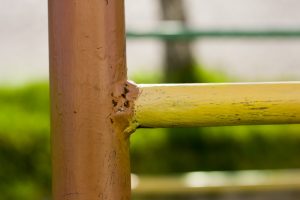 A failed gate hinge or a cracked railing may seem minor, but load-bearing welded parts carry real safety risk. A railing on a staircase, for example, must support sudden force from a person losing balance. If the weld at the base joint has been corroding for two years without inspection, that railing may not hold when it actually matters.
The American Welding Society (AWS) addresses visual inspection of all welds under AWS D1.1, the structural welding code for steel. The code states that all welds shall be visually inspected unless otherwise specified by the engineer. Property owners are not bound by this code the way contractors are, but the principle applies: all welds should be checked, and checked regularly.
New Orleans’ coastal climate makes inspection even more important. High humidity, salt air, and seasonal flooding create the perfect conditions for rust and weld degradation to accelerate.
For most residential and light commercial welded parts, a thorough inspection every 12 months is a reasonable baseline. High-traffic areas, coastal environments, or structures in storm-prone regions like New Orleans may need a check every six months.
Here is a simple breakdown by structure type:
After any significant hurricane or tropical storm, you should inspect all exterior welded parts regardless of when the last scheduled check was done. Wind, debris impact, and flooding accelerate joint degradation and can expose pre-existing weaknesses in weld seams.
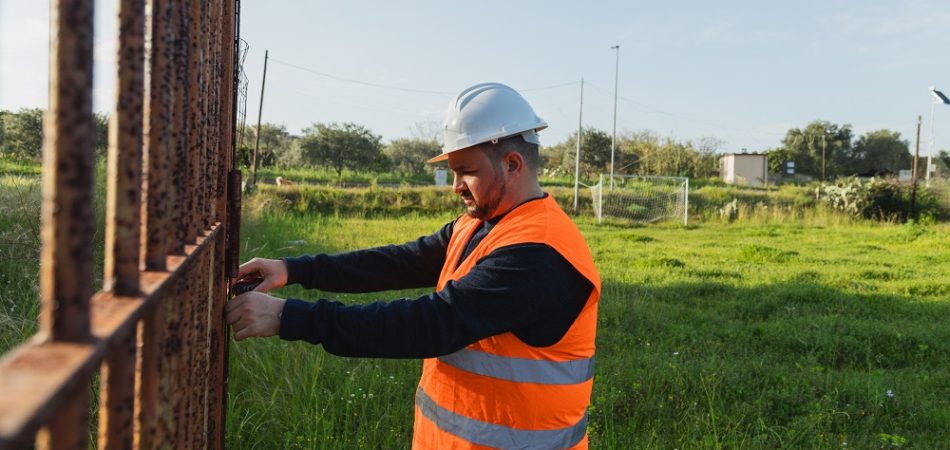
A basic visual inspection of welded parts focuses on surface-level signs of damage: rust streaks, visible cracks, paint bubbling near weld joints, loose connections, or warping around the heat-affected zone. You do not need special tools to spot these warning signs, but you do need to know where to look.
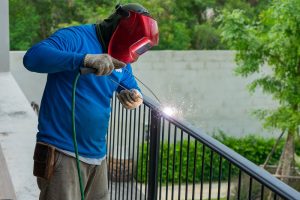
Start by checking the weld joints themselves. Run your eyes along the bead from end to end, looking for gaps, pitting, or unusual discoloration. Rust that forms at a weld joint rather than on flat metal is a sign that moisture is penetrating the weld area, which points to porosity or incomplete fusion.
Next, test the connection physically. Gently push or pull on the structure to check for movement at the joint. Any wobble or shift in a welded connection that should be rigid is a red flag requiring immediate professional attention.
Also look at the surrounding base metal. Cracks in the heat-affected zone, the area just outside the weld bead where the metal was exposed to high temperature during welding, can signal metal fatigue or thermal stress. These cracks are often hairline-thin and easy to miss, but they grow under load.
Call a professional when you see active rust at a weld joint, cracking in or around the weld bead, any loose or shifting connection, or if a structure has not been professionally inspected in over two years. Some weld defects, including internal porosity and subsurface cracking, are not visible at all without specialized testing equipment.
Visual inspection by the property owner is a good first step, but it has real limits. Certified professionals use non-destructive testing (NDT) methods to detect flaws that cannot be seen from the surface, including:
Our specialized mobile welding services bring professional inspection and repair directly to your property, no shop visit needed.
Inspection frequency depends on the material, the environment, how much stress the structure handles, and how old it is. Older welds, heavier traffic, and coastal exposure all push the schedule toward more frequent checks.
Key factors to consider:
 Load and traffic: A commercial gate that opens and closes dozens of times daily faces far more mechanical stress than a decorative residential fence panel.
Regular weld inspection keeps your property safe, your metalwork looking sharp, and your repair costs in check. The earlier you catch a problem at a weld joint, the simpler and less expensive the fix.
Annual inspections are the minimum for most structures, with more frequent checks recommended for safety-critical components and properties in high-humidity environments. As TurnKey Welders, we bring licensed, experienced welders to your location across New Orleans and the surrounding area.
Call us today to schedule a professional weld inspection or repair at your property.
Look for rust streaks originating at the weld joint, hairline cracks in or around the bead, bubbling paint near the weld, or any physical movement in a connection that should be rigid. These signs indicate the weld may be compromised and should be evaluated by a licensed welder.
Yes, a basic visual check is something any property owner can do. Walk the structure, look at each weld joint closely, and test for movement. However, subsurface defects require professional non-destructive testing equipment to detect, so a DIY visual check is a supplement to, not a replacement for, professional inspection.
A properly made weld on a well-maintained iron or steel gate can last 20 to 30 years or more. The limiting factor is usually corrosion at the joint, not the weld itself. Annual inspection and prompt touch-up of protective coatings extend weld life significantly.
Yes. High humidity, salt air near coastal areas, and seasonal flooding all accelerate rust and corrosion at weld joints. Structures in the New Orleans metro area generally benefit from inspection twice a year rather than once, especially for exterior ironwork.
The American Welding Society’s AWS D1.1 Structural Welding Code for Steel states that all welds shall be visually inspected and shall be acceptable if the criteria of the code’s acceptance table are satisfied, unless otherwise specified by the engineer. For professional and commercial projects, third-party inspection by a Certified Welding Inspector (CWI) is standard practice.
Undetected weld defects grow over time. A small surface crack becomes a full separation. Light surface rust becomes deep pitting that destroys the base metal. The cost of repair grows significantly the longer a problem goes unaddressed, and safety risk increases with each inspection cycle that gets skipped.
Permit requirements vary by project type and location. Structural repairs to load-bearing components in commercial buildings may require permits and licensed contractor documentation. Decorative or residential repairs to gates, fences, and railings typically do not, but it is always worth checking local code requirements before work begins.

Location
New Orleans, LA

Working Hours
Mon - Fri: 8:00 AM - 3:00 PM
Sat - Sun: Closed


 Turnkey Welders