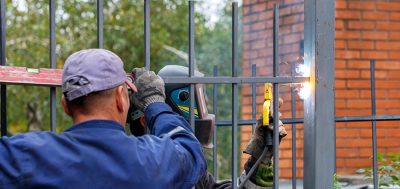
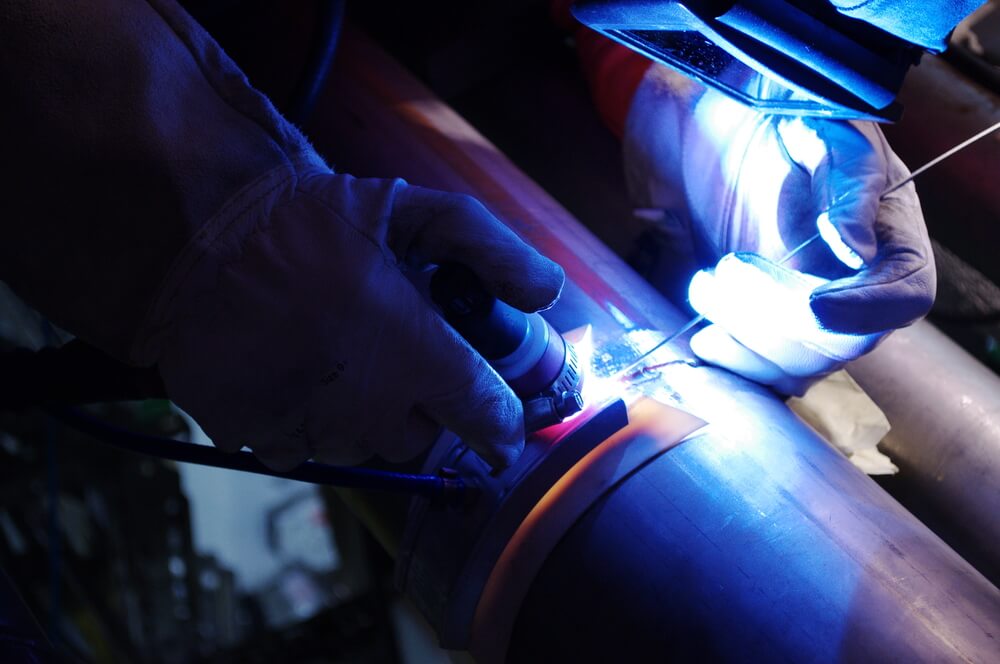
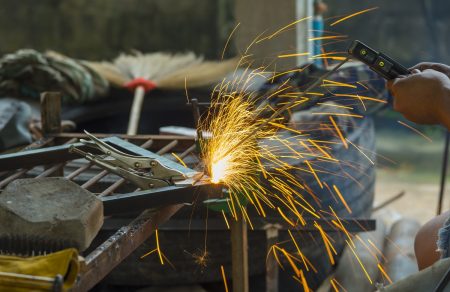
The decision between robotic and manual welding depends on precision, efficiency, and use. Robotic welding is automated to produce consistent welds for high-volume production, while manual welding uses skilled operators for flexibility and artistry. Automation increases speed and lowers labor expenses, but the skill of human welders is still required for specialized applications.
TurnKey Welders knows that choosing the appropriate welding technique is based on project size, production requirements, and cost. While automated systems simplify processes, manual welders offer flexibility that machines cannot match.
Need help deciding which method fits your project? Contact us today for expert guidance and a custom welding solution.
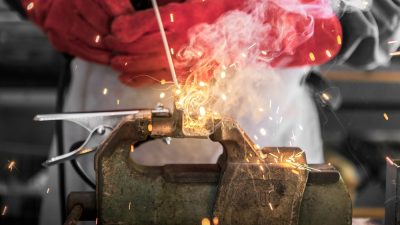
Manual welding is a skilled method of joining materials with precision using special tools. Effective welds are dependent on arc length, travel speed, and location.
Being flexible is one of its major strengths… With the ability to modify techniques for complex designs, skilled welders make it a practical choice for repairs, fieldwork, and personalized fabrication. Welding methods such as stick, MIG, and TIG are flexible. Although welders prioritize safety above all else, they utilize sight, touch, and sound to adjust for real-time changes that ensure excellent results.
Robot welding automation produces accurate welding adjustments with little human interaction. It is quick, accurate, and consistent, and therefore a good investment for the heavy manufacturing and automotive industries. With TIG, MIG arc support, and resistance welding, these systems minimize the risk of errors and workplace accidents through machine learning.
Robot and hand welding differ in automation, accuracy, and flexibility. Appreciation of the differences makes companies and laborers decide on the best approach for any job.
Robot welding utilizes advanced sensors and computer software to create repeat welds with less human error. In contrast to manual welding, which depends on the ability of the welder and offers more flexibility, but unreliable welds.
Robot welding offers unparalleled accuracy, creating repeatable, high-quality welds in high-production volume. Hand welding can be excellent, but it is more likely to be defective.
Robotic welding machines operate continuously, significantly boosting productivity. However, manual welders require breaks; therefore, automation is a better option for large-scale manufacturing.
Manual welding is ideal for applications that require quick modifications and unique procedures. Robotic welding, while efficient, requires costly reprogramming for new tasks.
Programming and maintenance skills are needed to operate robotic welding. Skills in techniques such as TIG and MIG welding are acquired by manual welders through experience. Automation can minimize the use of labor, but inefficiently trained operators can hinder efficiency.
The robotic welding installation is expensive but beneficial through lower labor charges and increased production. The manual welding installation is cheaper but labor-intensive in the long term.
Manual welding poses a considerable risk of burns and fumes. Welding is a safer option since it eliminates direct contact between the human body and the harmful task.
Robot welding reduces material waste through accuracy, maximizing resource usage. Human welding, although successful, may result in more material wastage due to human error.
Robotic welding integrates with Industry 4.0 technologies, enabling real-time monitoring and quality control. Manual welding remains a traditional craft, lacking digital integration.
Robotic welding, in cases of large-scale production, ensures large volumes of output with no loss in quality. For specialized tasks that require artistry, hand welding is the ideal choice.
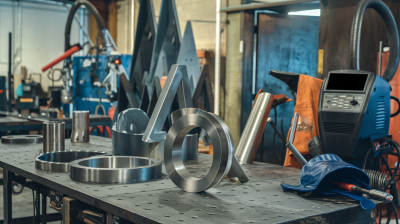
Robotic welding solves problems with manual welding and increases manufacturing through accuracy, consistency, and efficiency.
Robot systems deliver repeatable welding rates of 18–20 inches per minute without fatigue and continuous production. This is necessary for mass-production industries like automobile manufacturing.
Robotic welding creates welds that are reliable and accurate, independent of human assistance. Aerospace and structural welding necessitate a great deal of integrity.
Robotic welding avoids human error, producing accurate, consistent welds. Where strength is an issue, for example, in aerospace and structural welding, this accuracy is required.
Accurate weld placement minimizes waste, reducing costly rework and material loss. This efficiency benefits industries where materials are expensive.
Production is uniform with robotic welding, and high-quality products are produced with less supervision. Because of weariness or differences in ability, it is less erratic than manual welding. It is economical and improves efficiency, safety, and dependability.
Robot welding is faster and more precise, but there are downsides, particularly for small facilities with complex welding needs.
Automated welding requires of high initial capital, including machinery, installation, and training. Although it will save money in the long term, small facilities may still deem it costly and inflexible over manual welding.
Robotic welder programming requires experience and patience. It is more difficult for smaller teams to implement since it requires exact settings, unlike manual welding.
Repairs are costly in terms of downtime, and routine maintenance is required. Manual equipment is easier to maintain and less expensive.
Robots handle repetitive tasks well but struggle with complex welds or frequent changes, requiring reprogramming that adds time and cost.
Automation reduces manual welding jobs, but retraining workers for programming and maintenance can create new opportunities.
Manual welding is still necessary because of its flexibility, affordability, and human element. Despite automation, it thrives in custom projects and complex tasks that robots can’t handle.
Manual welding works with various materials and suits intricate projects, making it ideal for site work and quick modifications.
Manual welding is cheaper to set up, allowing small businesses to start projects quickly and see faster returns.
Manual welding shines in custom and low-volume production, where precision and quality are important. While the robot does repetition, welders produce one-of-a-kind, top-quality output.
Skilled welders troubleshoot and adjust instantly, maintaining quality even in unpredictable conditions. Robots require time-consuming reprogramming to fix issues.
Manual welding has no coding or setup lag, so it is easier to learn and faster to start.
Manual welding remains the norm in the industry, but is at a disadvantage concerning slower production, variable quality, safety risks, loss of material, and reliance on skilled staff.
Manual welding is slower than robotic equipment, with a fatigue-reducing speed and effectiveness. In high-speed industries, delays can cause massive losses.
Since the welder’s skill and concentration determine the quality of the weld, maintaining uniformity is challenging. Fatigue and distractions increase errors, necessitating more checks and corrections.
Manual welding exposes workers to burns, fumes, and other hazards. While training and protective gear help, risks remain higher than with robotic systems.
Errors like misalignments and incorrect settings lead to wasted materials, increasing costs. Robots produce precise welds, minimizing waste.
Manual welding depends on skilled professionals, yet locating and educating proficient welders is expensive.
Robot welding is better suited for high-volume, precision applications, while manual welding is best for custom, low-volume operations. The production requirement, complexity, and expense determine the choice of method.
Robotic welding excels in repetition and volume-sensitive tasks involving high precision and high speed. Production lines like automotive and aerospace use automated processes to great advantage. Despite high startup expenditures, it provides long-term efficacy to pay its price, although in bigger operations.
Hand welding is best for custom manufacturing, repairs, and low-volume productions that demand flexibility. It remains the favorite for specialized operations where automation isn’t feasible.
Robotic welding delivers speed and precision, while manual welding offers adaptability and craftsmanship. The best choice depends on budget, production demands, and project complexity.
Need help deciding? At TurnKey Welders, we provide expert guidance and customized welding solutions to fit any industry need. Whether you require precision automation or skilled craftsmanship, we’re here to ensure lasting, high-quality results. Get in touch with us today to discuss your project. Let’s build something strong together.

Location
New Orleans, LA

Working Hours
Mon - Fri: 8:00 AM - 3:00 PM
Sat - Sun: Closed


 Turnkey Welders