

Yes, you can weld cast iron, but it takes more care than welding steel. High carbon content makes the metal brittle and prone to cracking under heat stress. Success depends on slow, controlled preheating, the right filler rod, and gradual cooling. For cracked engine blocks, pipes, or ornamental pieces, a specialist welder gets the best results.
Cast iron shows up all over New Orleans: old porch columns, sewer and drain pipes, engine blocks, manhole covers, and decorative fence posts on Uptown and Garden District homes. It’s heavy, durable, and built to last generations, but it has one real weakness. It doesn’t handle heat shock well. Weld it the wrong way and you can end up with a crack running straight through your repair, sometimes worse than the damage you started with. The good news is cast iron welding is a well-understood process. Pros do it every week. You just have to respect the metal’s quirks and follow the steps in order.
Cast iron holds 2 to 4 percent carbon, compared to less than 1 percent in most steel. That extra carbon forms graphite flakes throughout the metal’s structure, which is why cast iron is hard and brittle instead of bending before it breaks. When a welding arc puts concentrated heat into one small spot, that area expands fast while the surrounding metal stays cool and rigid. That mismatch creates stress, and stressed cast iron cracks, sometimes right away, sometimes days later as the piece finishes cooling and contracting. This is also why you can’t just tack a crack in a cast iron pipe or a porch bracket and call it fixed. Without the right prep, the weld itself becomes the next crack point instead of a repair.
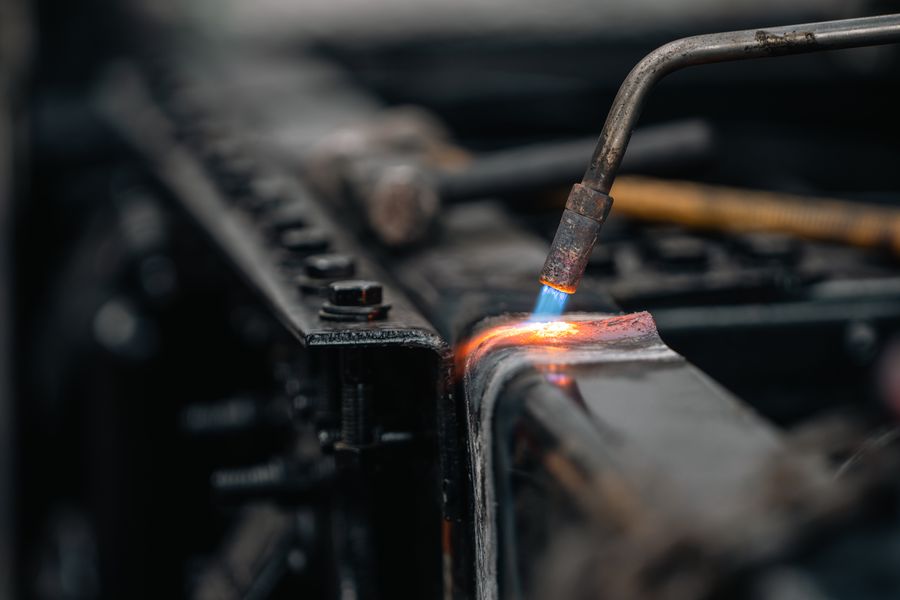
Preheating is the single most important step in cast iron welding, and it’s the step people skip when they’re in a hurry. Most repairs call for heating the whole piece, not just the area around the crack, to somewhere between 500°F and 1200°F depending on the alloy and the size of the casting. A propane torch or rosebud tip works fine for small parts; larger castings like engine blocks or structural columns often need extended torch time or a controlled oven to heat evenly all the way through. Skipping preheat, or heating just one side, is how you end up with a weld that looks solid and then splits the next morning. Cooling matters just as much as heating. Wrapping the piece in a welding blanket, burying it in dry sand, or letting it cool inside a shut-off oven all work well. Rapid cooling in open air, or worse, hitti


 Turnkey Welders