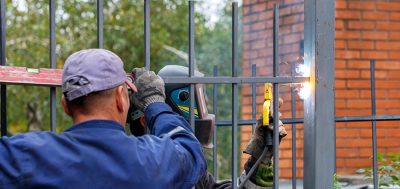
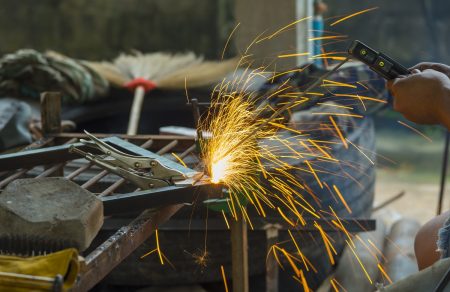
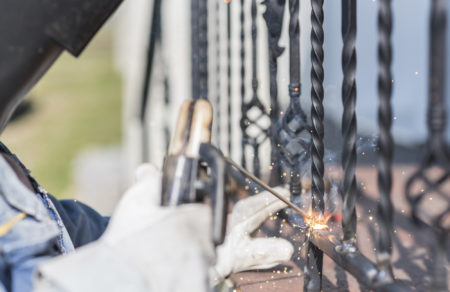
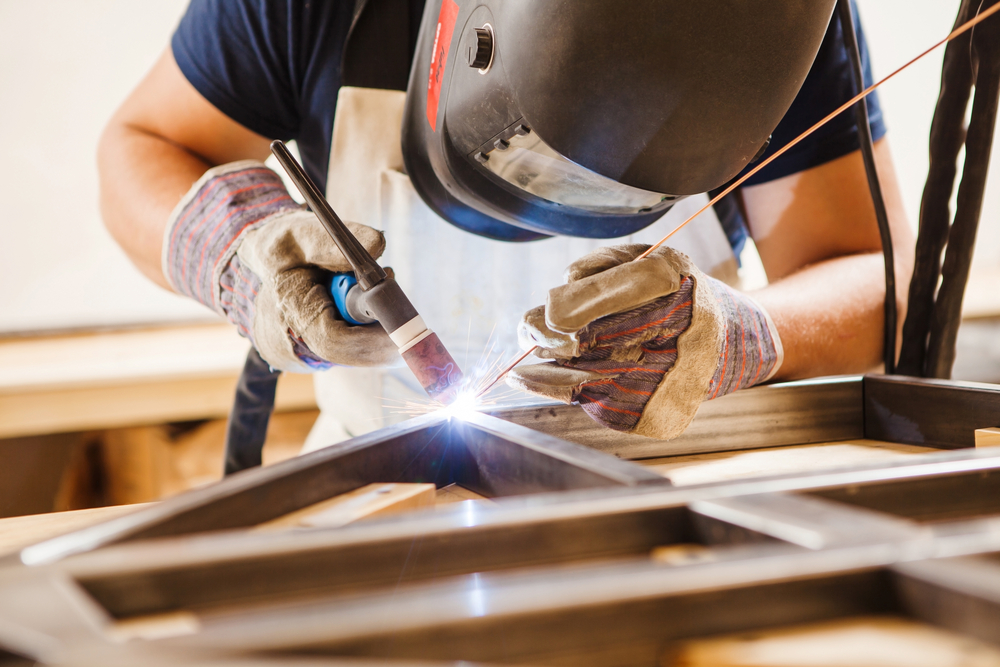
Understanding the welding process for pipe installation involves proper preparation, choosing the right welding method, and precise execution to maintain structural integrity and safety. Common techniques like TIG, MIG, and stick welding are chosen based on material and application.
All for safe and reliable systems for your home, office, or industrial needs. At TurnKey Welders, we provide expert pipe welding and installation services to keep your systems strong and dependable. Need help with your next project? Call us today, we’re always happy to assist you.
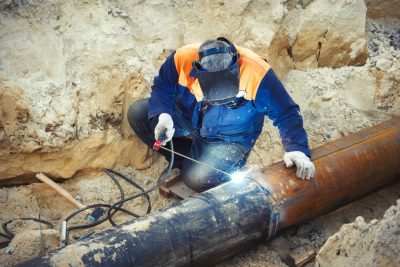
Choosing a welding procedure is critical for successful pipe laying, as all techniques have advantages and disadvantages regarding weld quality, structural integrity, and efficiency.
Stick welding, colloquially known as SMAW, is portable, very simple to work with in remote areas for pipeline welding. Its versatility is its attraction, welding metals of differing types and thicknesses, like carbon steel and stainless steel. Great welding is a matter of great skill, particularly on multi-pass welding in difficult positions like 6G. Cellulosic electrodes accelerate the progress and increase penetration for solid root passes in vertical-down welding.
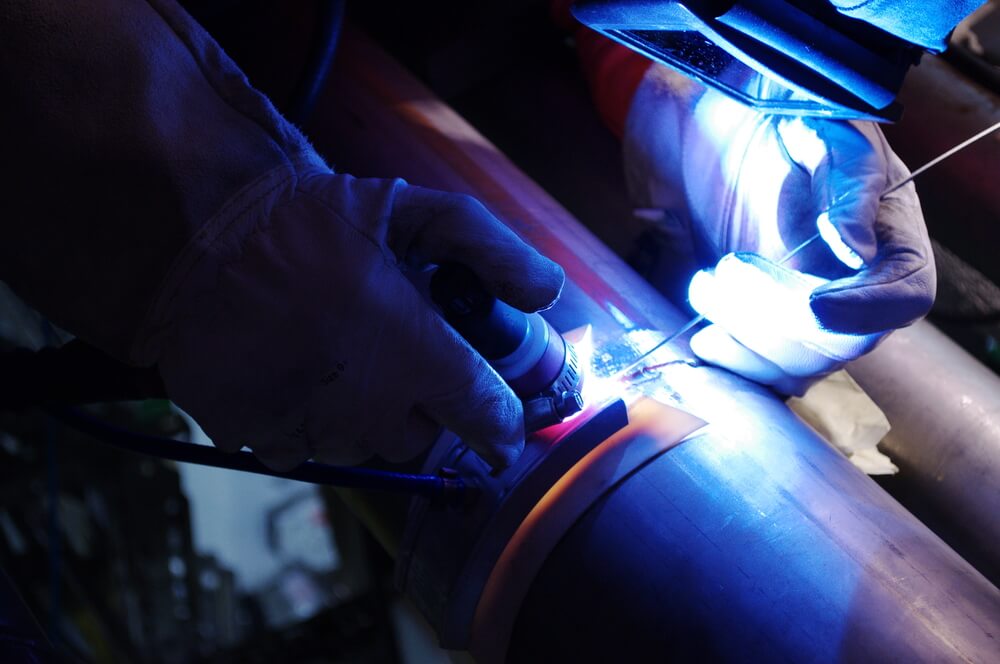
TIG welding offers control and cleanliness, which is most essential in the welding of thin-walled pipes or when applied to critical systems, such as chemical lines. Inert gas shields against contaminants that would otherwise deteriorate the joint. TIG requires a skilled welder for precise control. Not for mass production owing to its slow working speed, it guarantees the finest results for detailed jobs.
Gas Metal Arc Welding (GMAW) is highly productive and speedy upon application to larger concerns. It interfaces wonderfully with automation, augmenting production in indoor controlled environments. Shielding gas minimizes spatter production and creates neat, quality welds. Equally essential are the pre-joint preparation operations of alignment and cleaning of the pipes.
Flux-Cored Arc Welding is flexible and readily negotiates various positions. Its self-shielding capability allows for outdoor application, where it can be effective even under windy conditions. FCAW’s high deposition rate suits heavy work, but the equipment must be tuned properly to prevent defects.
SAW is very productive in deep penetration for large diameter pipes and pressure vessels. The granular flux protects the weld pool for better quality. SAW is limited to a flat or horizontal position only.
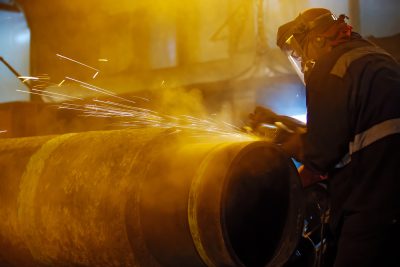
Just as in welding, pipes require pre-weld preparations! Everything you do in pre-weld preparation will affect the appearance, expediency, and longevity of the job. Below are the major steps in the process.
This is always an important process to remove various contaminants like dirt, grease, rust, paint, and moisture from the pipe surfaces. These contaminants may cause weld defects such as porosity and cracking. Mechanical cleaning methods, like using a coarse-grit flap disc, are often used for rust removal, but they tend to become unusable quite quickly. A 60-grit disc should be preferred for a smoother finish.
Chemical cleaning with solvents or degreasers is efficient for grease removal. It is equally important to keep the work area clean, for dust and debris can adversely affect welding. Ventilation and regular cleaning can greatly reduce such potential risks.
Beveling is more of a joint geometry preparation with augmenting effects on weld penetration and fusion. In other words, it increases welding surface areas, guaranteeing weld strength. Consistent angles in beveling are critical since the angle bevels affect nugget strength and weld defects, and the use of bevelers or angle grinders. Accuracy in beveling is crucial, as even small errors affect weld quality.
Correct fit-up means achieving the proper alignment and spacing of pipe sections. If there is a small gap, it reduces filler metal and thus saves time and money. The pipes should be secured through clamps and fixtures during the alignment stage to get an accurate weld. A poorly fit-up pipe can create a structural weakness or variable weld. A highly qualified welder and/or fitter will identify and address most alignment issues before welding.
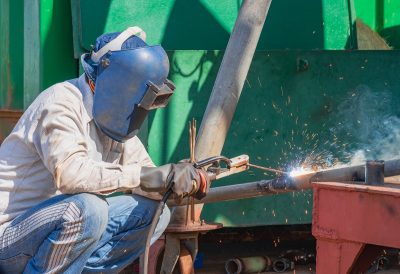
About Pipefitters’ Role: Pipefitters are just as critical as the welders in the installation of pipes. The workmanship is extremely precise and technical in nature, and it cooperates closely with the welders in working toward the project objectives as governed by industry practices.
Pipefitters begin by interpreting blueprints and schematics to determine the piping system’s layout, dimensions, and specifications. Accurate interpretation is vital, as any misreading of drawings can lead to alignment issues or safety hazards. They use tools such as squares and straight edges for precise measuring and marking of pipe sections. Proper training in math and spatial interpretation is essential since even small errors can lead to costly mistakes.
Pipefitters use cranes and guides, and pipe rollers when handling heavy pipes. Protecting a pipe is important, as a dent or scratch can affect the quality of the weld. Thus, they are concerned about safety in storing within the limits so that warping and corrosion do not take place.
Weld joint preparation is a shared responsibility between pipefitters and welders. The pipefitters ensure accurate cutting of pipes and proper alignment with consistent gaps. Poor joint preparation may cause leakage and failures. The pipefitters secure the pipes while welders concentrate on welding. This teamwork allows for the realization of strong, durable welds complying with the project specifications.
Pipe welding demands skill, planning, and teamwork. Every step—from preparation to the final weld—matters. Strong alignment and precise methods lead to lasting results.
When you need reliable and efficient pipe installation, don’t settle for less. TurnKey Welders provides expert pipe installation in residential, commercial, or industrial settings.
Contact us today to save time and avoid unnecessary stress.

Location
New Orleans, LA

Working Hours
Mon - Fri: 8:00 AM - 3:00 PM
Sat - Sun: Closed


 Turnkey Welders